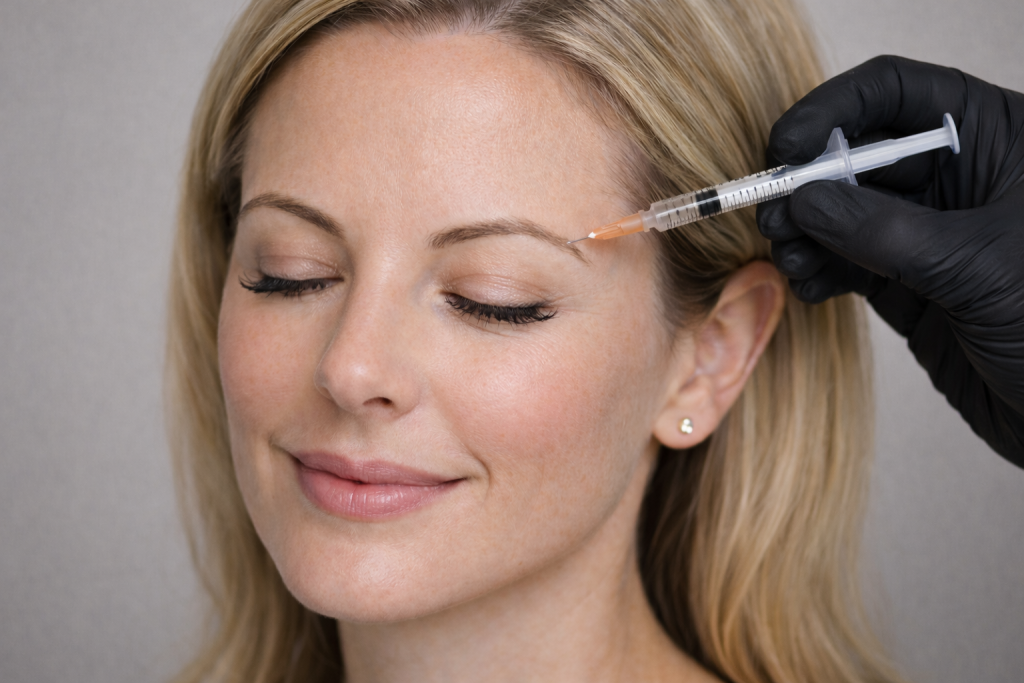
One of the most common questions we hear is:
“How many units of Botox do I need?”
If you’ve searched this online, you’ve probably seen wildly different answers — and that’s because Botox dosing is not one-size-fits-all. The right number of units depends on your facial anatomy, muscle strength, treatment area, and goals.
At MYBFF Med Spa + Social, all neuromodulator treatments are nurse injector-led, which means dosing decisions are based on anatomy and safety — not trends or cookie-cutter charts.
Why Botox Units Matter
Botox works by relaxing targeted facial muscles that cause expression lines. The number of units used determines:
- How much muscle movement is softened
- How natural your results look
- How long results last
- How balanced your facial expressions remain
Too few units may not give you the result you want.
Too many units can lead to stiffness or an unnatural look.
That’s why dosing should always be individualized.
Average Botox Units by Treatment Area
While every face is different, here are general ranges used by trained nurse injectors:
Forehead Lines
10–20 units
Depends on forehead size, muscle strength, and whether other areas are treated.
Frown Lines (11s)
15–25 units
This area often requires more units due to stronger muscle activity.
Crow’s Feet
10–24 units total
Typically divided evenly between both sides.
Brow Lift
2–6 units
Used strategically to create a subtle lift.
Lip Flip
4–6 units
Small doses create a gentle outward roll of the upper lip.
Chin Dimpling
4–8 units
These are guidelines, not prescriptions. Final dosing is determined during your consultation.
Why Two People May Need Different Units
Two patients treating the same area may need very different doses.
Factors that influence Botox units include:
- Muscle strength and movement patterns
- Facial symmetry
- Gender differences in muscle mass
- Previous Botox history
- Desired level of movement vs relaxation
This is why shopping Botox by “price per unit” alone can be misleading.
Does More Units Mean Better Results?
Not necessarily.
The goal of Botox is balance, not paralysis. Well-placed, appropriate dosing leads to:
- Softer lines
- Preserved expression
- Natural movement
- Longer-lasting results
At MYBFF Med Spa + Social, we focus on conservative, strategic dosing to enhance your features — not overpower them.
Can Units Affect How Long Botox Lasts?
Yes.
In general:
- Adequate dosing = results that last 3–4 months
- Underdosing = results may fade sooner
However, longevity also depends on metabolism, muscle strength, and consistency of treatments.
👉 How Long Does Botox Last? Timeline, Results & Maintenance Explained
Botox vs Dysport vs Jeuveau: Do Units Change?
Yes. Units are not interchangeable between products.
Botox, Dysport, and Jeuveau all have different dosing units and diffusion properties. Your nurse injector will adjust dosing depending on which product is used to achieve equivalent results.
👉 Botox vs Dysport: What’s the Difference and Which Is Better?
How a Nurse Injector Determines the Right Dose
At MYBFF Med Spa + Social, dosing decisions are based on:
- Facial anatomy assessment
- Muscle movement evaluation
- Your aesthetic goals
- Safety-first medical guidelines
Botox is treated as a medical procedure, not a cosmetic shortcut.
Is It Safe to Start with Fewer Units?
Yes — especially for first-time patients.
Many patients prefer to:
- Start conservatively
- Assess results
- Adjust at follow-up if needed
This approach supports natural outcomes and builds confidence over time.
Botox in San Antonio: Why Expertise Matters
If you’re searching for Botox in San Antonio, remember that results depend far more on who is injecting than the number of units used.
At MYBFF Med Spa + Social, all treatments are performed in a nurse injector-led medical setting, prioritizing safety, anatomy, and long-term facial balance.
👉 Schedule Your Botox Consultation
Final Takeaway
There is no universal answer to “How many units of Botox do I need?”
The right dose is the one that:
- Matches your anatomy
- Supports natural movement
- Achieves your goals safely
A personalized consultation with a trained nurse injector is the only way to determine the correct amount.